
LINKS:
Education
OpenSpace project
Meteorites on Display
Teaching Resources
Research
modeling rock condensation
Tomography
STARDUST-aerogel
Lunar Spherules-3D
Meteorites in 2D + 3D
sulfides + sulfosalts
pdf version of CV
Media
The Museum
Ross Hall of Meteorites
Educator Resources for the Hall
Meteorite Collection
Earth and Planetary Sci.
Department of Astrophysics
Education: MAT Program
REU Program
|
Programs: To apply for Post-doctoral or Graduate Fellowships at AMNH, please go to
RGGS FELLOWSHIPS.
To apply for the AMNN Physical Sciences REU program, please see
REU APPS.
To learn about our AMNH Master of Arts in Teaching (Earth Science) program, please see
AMNH MAT.
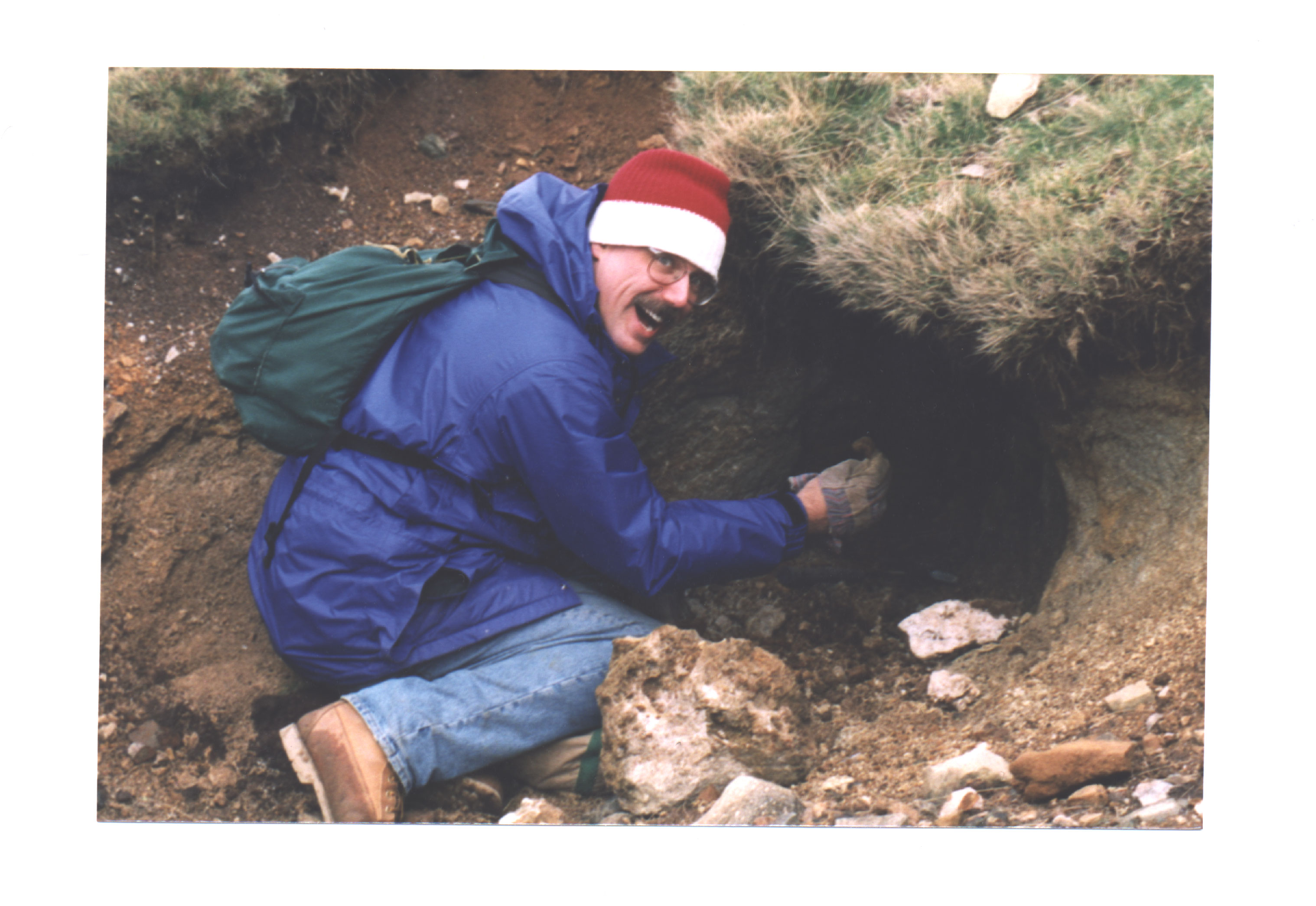
Meteorites are pieces of planets, or samples of
the material 'left over' from formation of the sun and planets,
over four and a half billion years ago. They are clues to the origin of our solar system
and planetary systems around other stars.
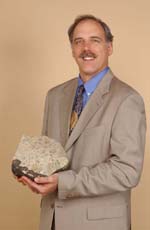
I am a geologist specializing in the study of extraterrestrial rocks and cosmochemistry.
I serve as the curator of the AMNH meteorite collection. AMNH affiliates, students,
and I use the collection to understand early solar system processes such as planet formation.
Part of our mission is to make meteorite samples available for research by scientists across the world.
Collections-based research is vital to the exploration of space and a better understanding
of our origins.
(2004 Ebel white paper) Meteorites, Asteroids, Planets, and the Exploration Vision Strategy
(2015 CAPTEM white paper) Astromaterials Research in Planetary R&A
Public outreach, teacher training, and education are part of the Museum's core mission.
In 2003, I served as lead curator in reimagining the Museum's magnificent
Arthur Ross Hall of Meteorites.
I serve as faculty in the AMNH's
Master's of Arts in Teaching (MAT)
program to strengthen Regents-level Earth Science teaching in New York State, and as science co-investigator on our
OpenSpace project to develop visualization software for planetary and space science.
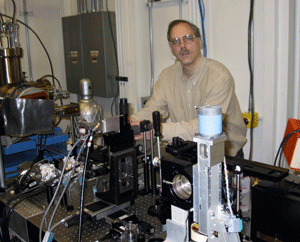
Research in meteorites at AMNH focuses on modeling how gas, solid,
and melt phases interact at high temperatures and low pressures, to understand
the condensation of the first solids, and molten (liquid) rock droplets in the solar system, precursor materials for the planets.
We also apply image analysis to 3-dimensional x-ray CT-scans and microscopic 2D elemental maps of meteorites to understand their chemistry and how they are put together.
Check these links to see meteorites in a whole new light:
TOMOGRAPHY (3D) and
PETROGRAPHY (2D).
My research career began with laboratory investigations of how
silver, copper, nickel and platinum-group metal ores form in the Earth, to model their thermodynamic properties, and develop
predictive tools. See:
MAGMATIC SULFIDES and
HYDROTHERMAL SULFOSALTS. Today, we are working on the volatile content of explosive silicic magmas in the AMNH experimental petrology lab.
|


 A.M.N.H. home