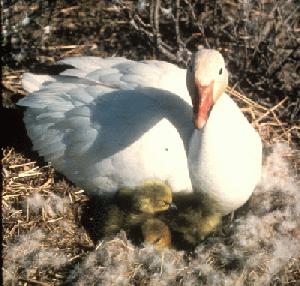
| Over 200 species of migratory birds use the coastal lowlands of the Hudson Bay region both for breeding and for staging during migration. The unique plant and animal communities of this region reflect the interactions of ecological processes with northern climatic and geologic factors. Recent changes in human activities in the southern part of these birds’ ranges have led to an imbalance in the northern plant-animal interactions. In particular, the Mid-continent population of lesser snow geese, a keystone herbivore in coastal ecosystems of Hudson and James Bays, has tripled to nearly 6 million in the past 30 years. As a consequence of their numbers and their destructive feeding habits, large tracts of coastal wetlands are being degraded. The runaway consumption has begun a process of habitat degradation and rapid ecological change that adversely impacts most of the species sharing this coastal habitat. |
| The
Hudson Bay Project is a collaborative research program designed to
examine the interacting biotic and abiotic factors that lead to the
initiation and spread of these types of runaway processes (trophic
cascades) in the coastal lowlands of this region. By understanding
underlying processes and their impacts, we will be in a better position
to develop strategies that may slow or halt the spread of the trophic
cascades and perhaps lessen or even reverse their attendant
degradation. The scope of the problem requires the integration of
numerous areas of biological and physical sciences. |  |
revised 04/12/12