| |
|
Designed for 1024x768 resolution
(click here to know more about spider
Morphology) |
(click here to see images of spiders) |
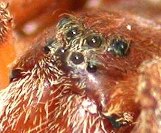
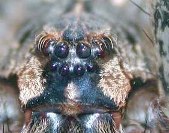
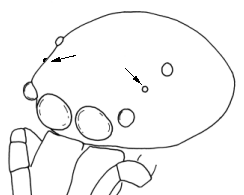
| 1a | Eight eyes present (sometimes small eyes are very difficult to see) |
2 | 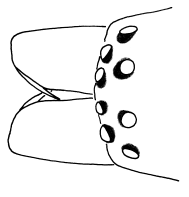
 |
|||
| 1b | Six eyes present | 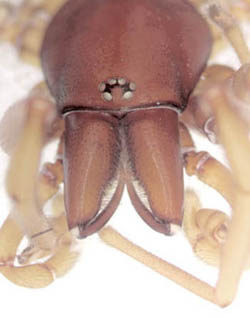
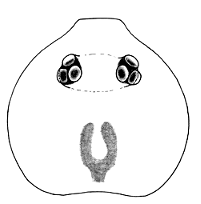
|
||||
| 2a | Cribellum (a small plate just in front of spinnerets) absent | 3 | 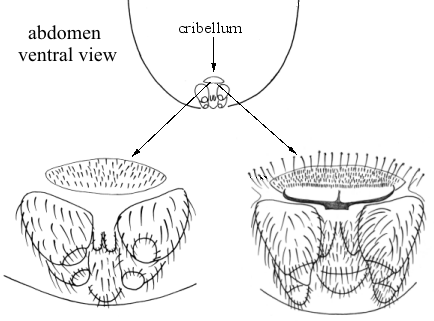 |
|||
| 2b | Cribellum (a small plate just in front of spinnerets) present | 24 | ||||
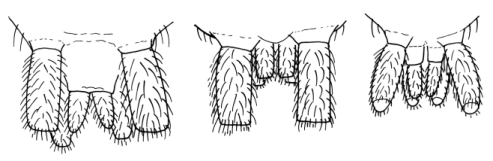
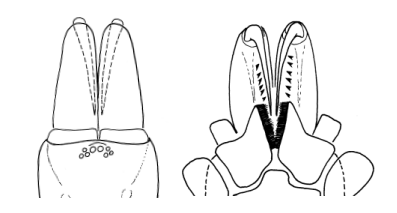
| 3a | Chelicerae directed downward or downward and forward, cheliceral fangs directed towards each other | 4 | 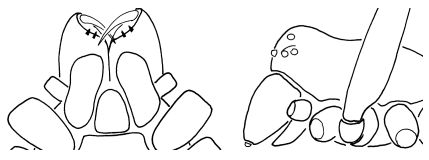 |
|||
| 3b | Chelicerae projecting forward, cheliceral
fangs directed more or less parallel to the main body axis
fam. Atypidae |
 |
||||
| 4a | Tarsi with three claws | 5 | 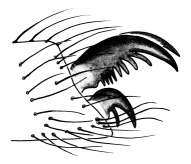 |
|||
| 4b | Tarsi with two claws | 17 | 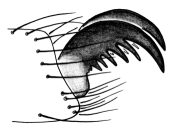 |
|||
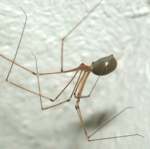
| 5a | Spiders with extremely long
and thin legs, leg II 4-5 times longer than body
fam. Pholcidae |
|
||||
| 5b | Spiders without extremely long and thin legs | 6 | ||||
| 6a | Tibia and metatarsus I &
II with a row of long prolateral spines
fam. Mimetidae |
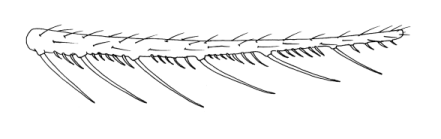 |
||||
| 6b | Tibia and metatarsus I & II without a row of long prolateral spines | 7 | ||||
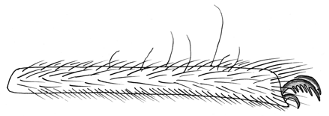
| 7a | Tarsi IV with 6 or 10 serrated
setae, forming a comb
fam. Theridiidae |
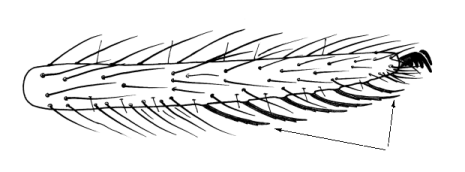 |
||||
| 7b | Tarsi IV without such a comb | 8 | ||||
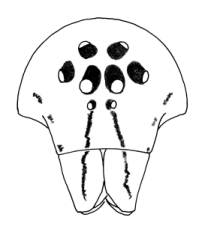
| 8a | Eye group in hexagonal arrangement
fam. Oxyopidae |
 |
||||
| 8b | Eye group not in hexagonal arrangement | 9 | ||||
| 9a | Tarsi with numerous trichobothria (extrimly thin sensory setae) | 10 | 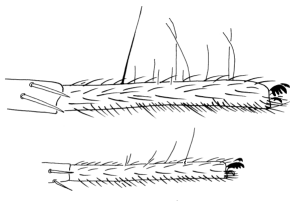 |
|||
| 9b | Tarsi without trichobothria | 13 | ||||
| 10a | Tarsal trichobothria in a single dorsal row | 11 | 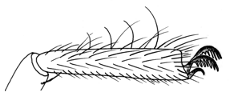 |
|||
| 10b | Tarsal trichobothria irregular, in two dorsal rows | 12 |
|
|||
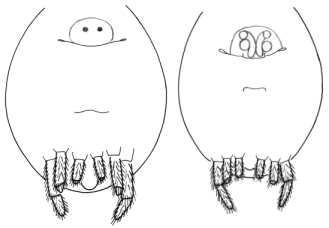
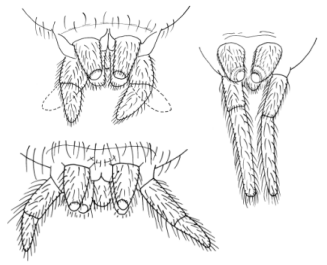
| 11a | The six spinnerets
in a more or less transverse row
fam. Hahniidae |
 |
||||
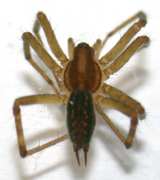
| 11b | The six spinnerets in three rows
fam. Agelenidae |
  |
||||
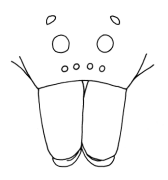
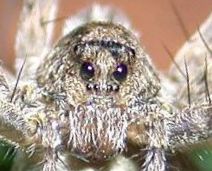
| 12a | Posterior row of eyes so
strongly recurved that it may be considered to form two rows
fam.Lycosidae |
  |
||||
| 12b |
Posterior row of eyes slightly recurved and not forming two distinct rows fam. Pisauridae |
|
||||
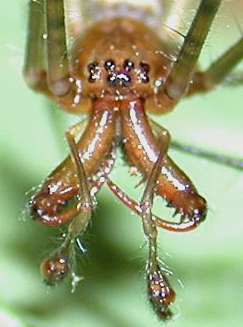
| 13a | Chelicerae divergent from
base, usually long and strong
fam. Tetragnathidae |
 Click
picture Click
picture |
||||
| 13b | Chelicerae not divergent from base | 14 | ||||
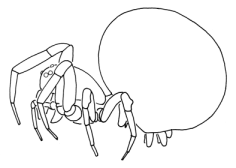
| 14a | Femur I distinctly thicker
than femur IV (~ 3 times), small spiders with spherical abdomen
fam. Theridiosomatidae |
 |
||||
| 14b | Femur I & IV almost the same thickness | 15 | ||||
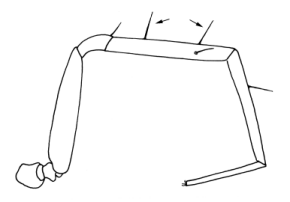
| 15a | Tibia IV with 1 or 2 dorsal
spines
fam. Linyphiidae |
 |
||||
| 15b | Tibia IV usually with numerous spines and/or setae | 16 | ||||
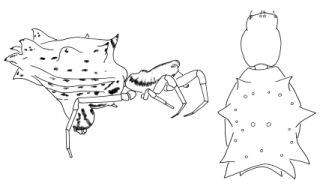
| 16a | Spinnerets situated anteriorly
almost in the center of ventral surface of abdomen.
fam. Araneidae, |
 |
||||
| 16b | Spinnerets situated at the end of abdomen
fam. Araneidae |
|||||
| 17a | Tracheal spiracle in middle
of ventral surface of abdomen, or closer to the epigastric furrow
fam. Anyphaenidae |
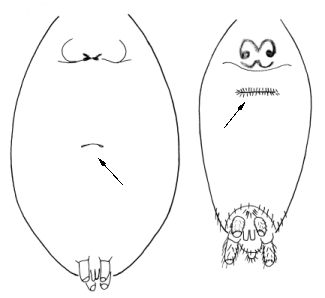 |
||||
| 17b | Tracheal spiracle just in front of the spinnerets | 18 | 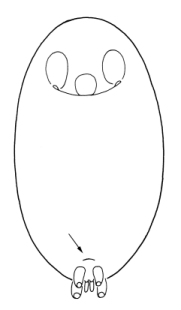 |
|||
| 18a | Eyes arranged in three
rows, the front or anterior median eyes very large
fam. Salticidae |
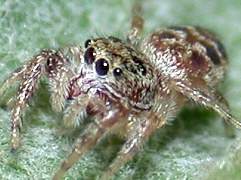
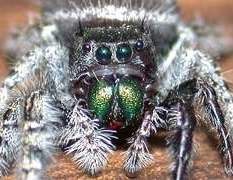
|
||||
| 18b | Eyes arranged in two rows, the front or anterior median eyes not especially large | 19 | ||||
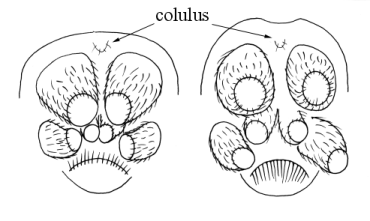
| 19a | Colulus present. Legs I
& II much longer than III & IV, spiders crab-shaped.
fam.Thomisidae |
  <= Click to see photo
 |
||||
| 19b | Colulus absent | 20 | ||||
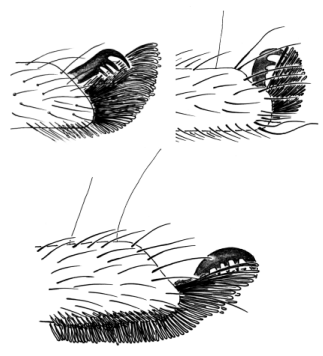
| 20a | Tarsi I & II with scopulae (thick
dense setae)
fam. Philodromidae |
 |
||||
| 20b | Tarsi I & II without scopulae | 21 | ||||
| 21a | Anterior spinnerets cylindrical,
widely separated at base
fam. Gnaphosidae |
|||||
| 21b | Anterior spinnerets conical, separated by a distance much closer than their diameter | 22 | ||||
| 22a | Clypeus less than the diameter
of an anterior median eye (AME), if it is about so (Fig) - posterior
median eyes (PME) separated about their diameter
fam. Clubionidae |
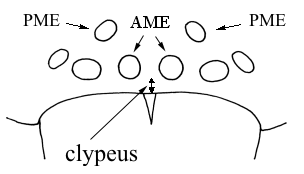 Clypeus - distance between edge of carapace and anterior row of eyes. |
||||
| 22b | Clypeus not less than the diameter of an anterior median eye (AME), usually at least 2-3 times as wide | 23 | 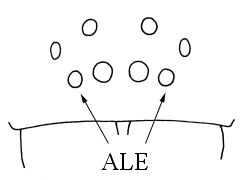 |
|||
| 23a | Anterior lateral eyes (ALE)
not larger than AME
fam. Corinnidae |
|||||
| 23b |
Anterior lateral eyes (ALE) larger than AME fam. Liocranidae |
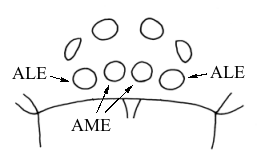 |
||||
| 24a | All eyes homogenous, light
in color, tarsi with a dorsal row of trichobothria
fam. Amaurobiidae |
 |
||||
| 24b | Eyes homogenous, dark in color, or heterogeneous light and dark in color; tarsi without trichobothria | 25 | ||||
| 25a | Eyes homogenous, dark;
metatarsus IV compressed and concave above
fam. Uloboridae |
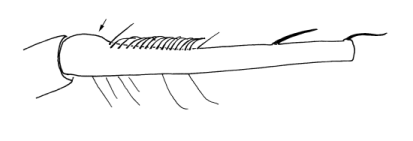 |
||||
| 25b | Eyes heterogeneous; metatarsus IV normal
shape (not compressed and concave above)
fam. Dictynidae |
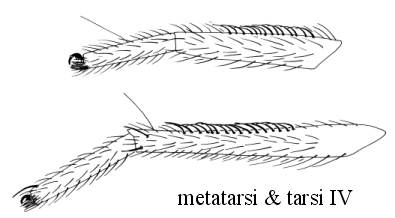 |
||||
| 26a |
Spiders with extremely long and thin legs, II leg 4-5 times longer than body fam. Pholcidae |
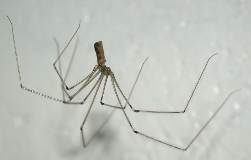 |
||||
| 26b | Spiders without extremely long and thin legs | 27 | ||||
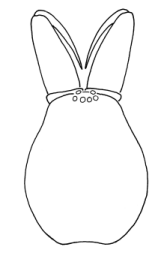
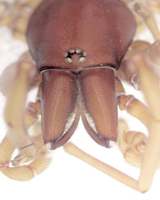
| 27a |
Chelicerae large directed downward and forward, carapace and legs deep red fam. Dysderidae |
|
||||
| 27b |
Chelicerae projecting downward, carapace and legs not red |
28 |
|
|||
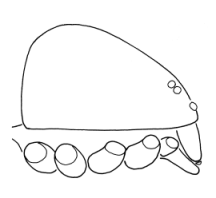
| 28a | Carapace strongly arched
behind, body dappled
fam. Scytodidae |
 |
||||
| 28b | Carapace not arched behind, body not dappled
fam. Segestriidae |
|
 |
| General Information on the Project | List of Spiders | Biotopical Distribution of Spiders |
© American Museum of Natural History,
June 01, 2002
This page is maintained and designed by Vladimir
Ovtsharenko & Andrei Tanasevitch